

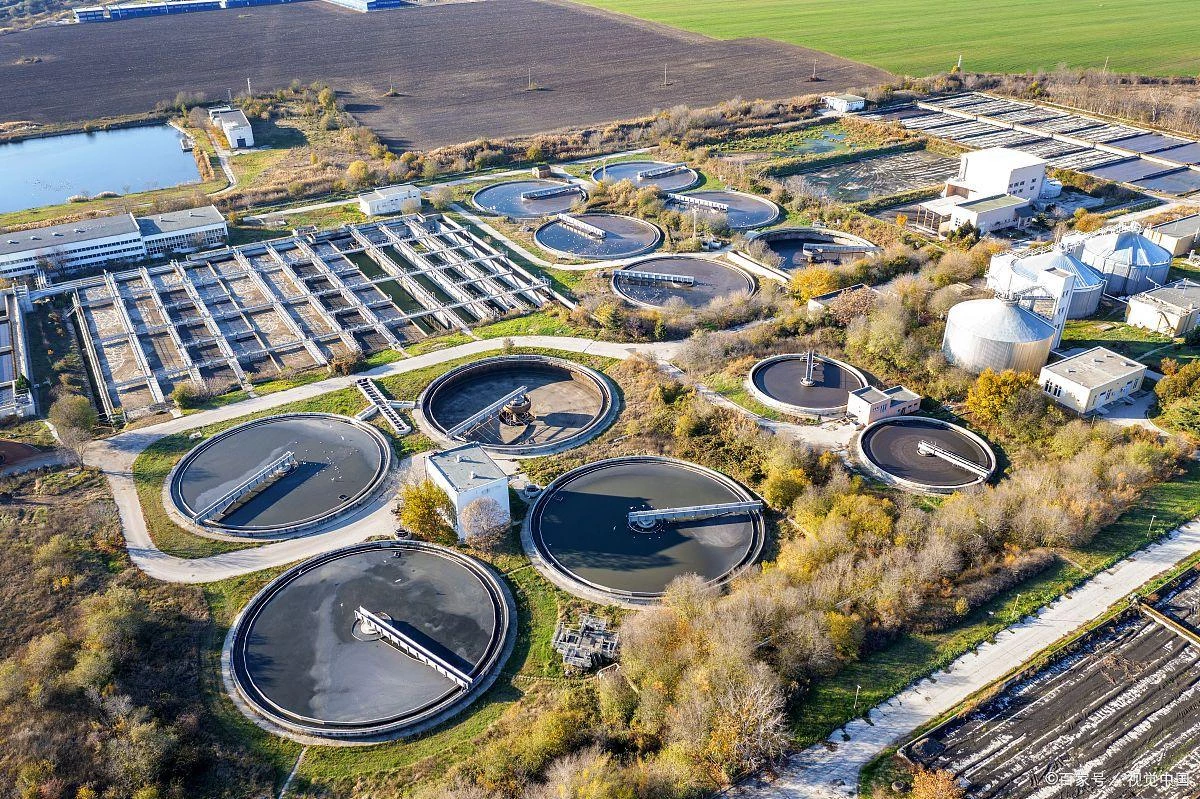
As rural development accelerates, domestic sewage treatment has become essential to improving living environments. However, rural sewage treatment typically faces three challenges: numerous small and dispersed treatment sites, complex communication and cabling, and high maintenance costs. A single township may oversee more than a dozen—or even several dozen—administrative villages.
Each village operates a small-scale treatment plant with a capacity of 20–200 m³/d, typically employing processes such as AO, MBR, or constructed wetlands combined with biological contact oxidation. Monitored equipment includes feed and recirculation pumps, blowers, bar screens, dosing systems, electric valves, and instruments for level,flow, pH, dissolved oxygen (DO), and COD.
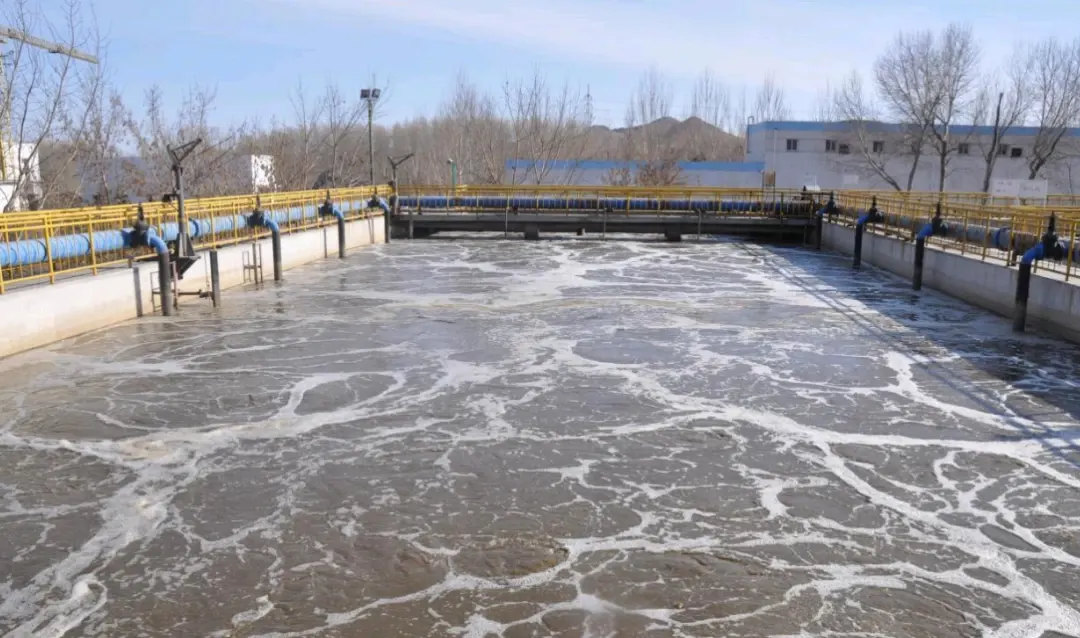
Challenges and Control Requirements in Rural Wastewater Treatment
To address these challenges, a water and environmental engineering company specified a PROFINET-based distributed I/O architecture across multiple rural decentralized wastewater treatment projects. The architecture consolidates data from nearby sites into a single control center, enabling unattended operation, centralized monitoring, and remote O&M.
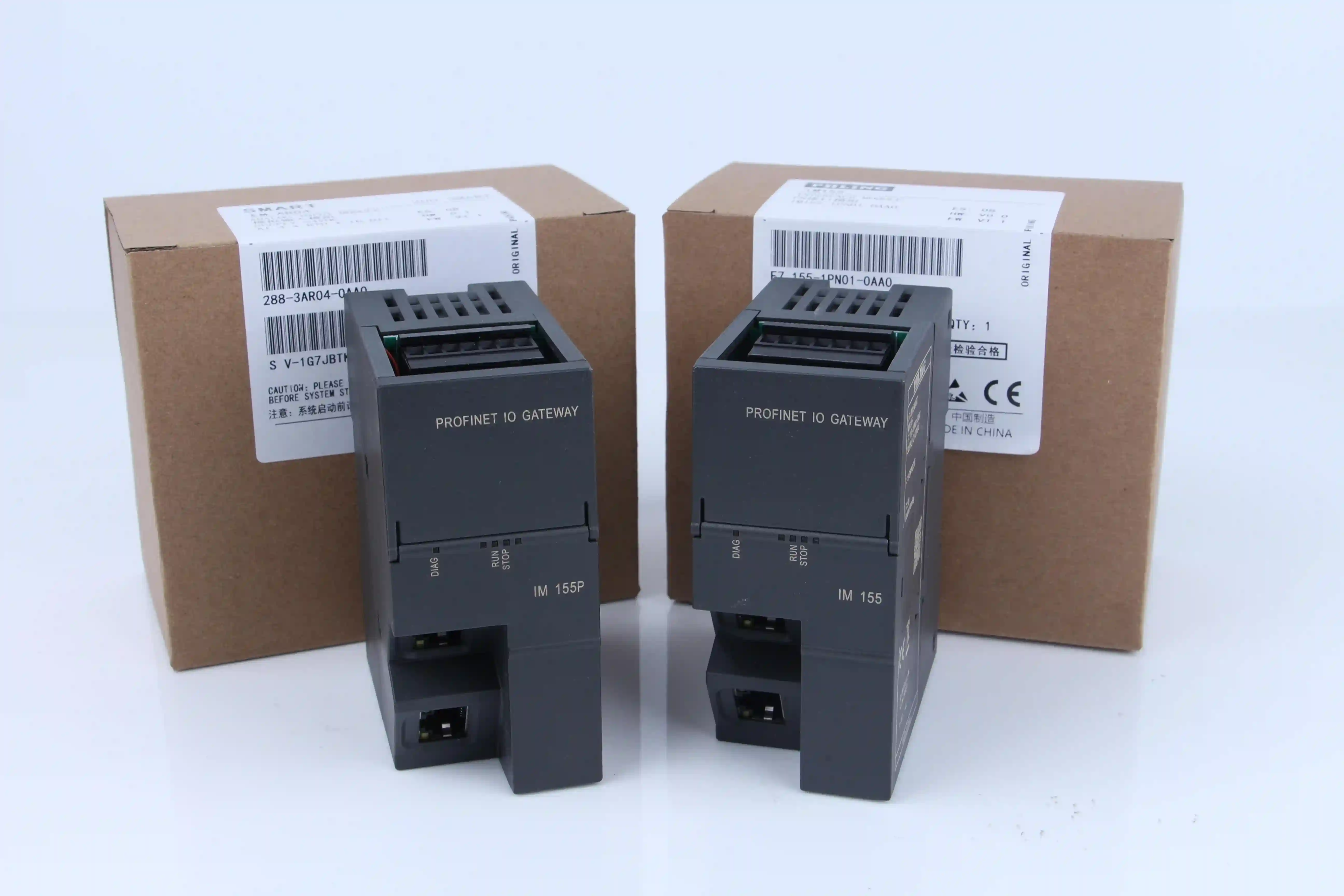
PHLEEN IM155 Enables a Scalable Distributed Control Network
PHLEEN’s IM155 supports expansion with 200 SMART expansion modules. With its exceptional stability, wide variety of expansion modules, flexible networking options, and robust communication capabilities, it is highly suited for this project’s application. This project utilizes the powerful S7-1500 series CPU as the controller, the IM155 as the bridge, and the 200 SMART expansion modules as I/O, forming a data acquisition and control system comprising several thousand data points.
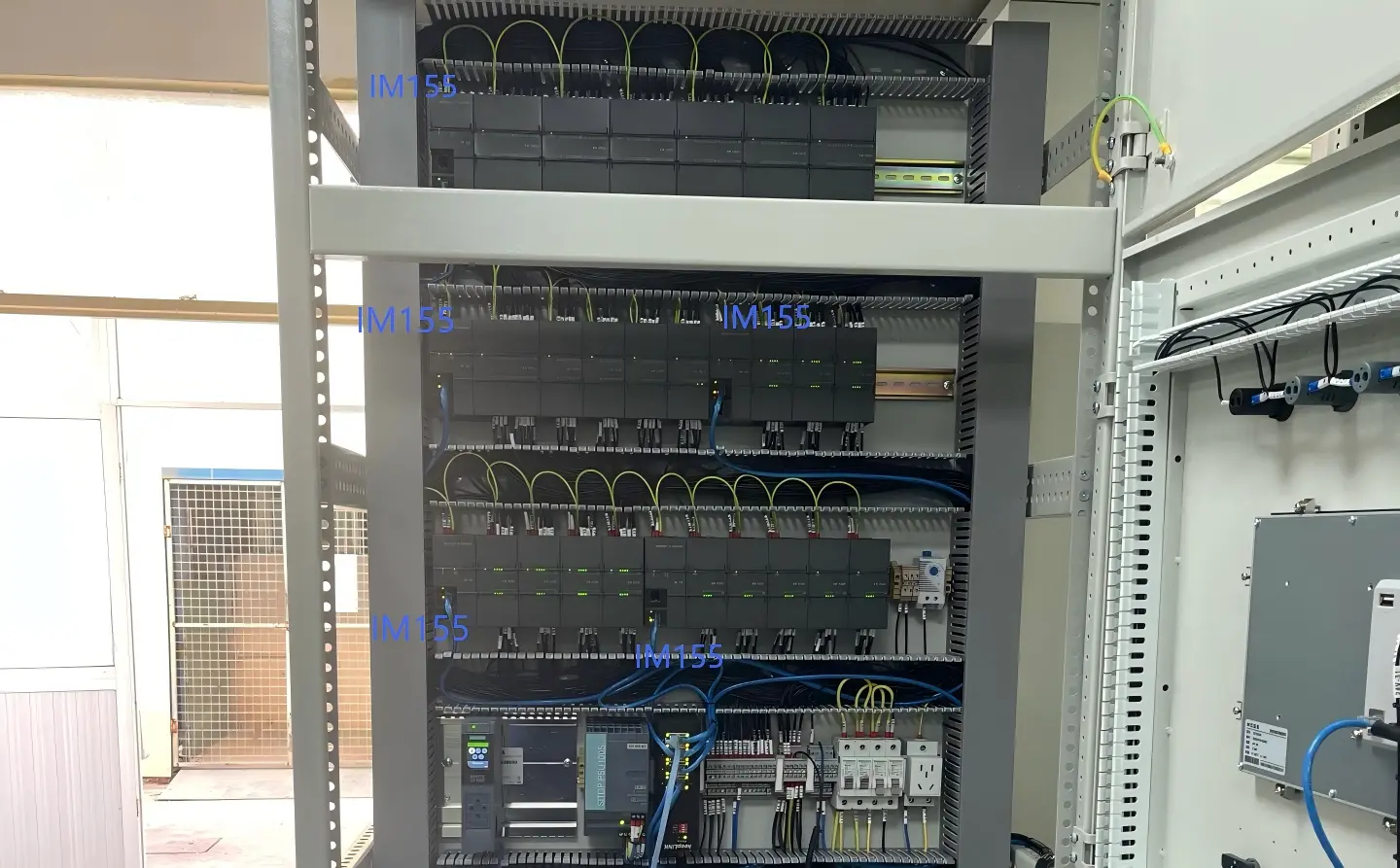
Adapting to a Decentralized Layout: Within the system architecture, the IM155 serves as a remote I/O station interface and can connect to PHLEEN 200 SMART, original 200 SMART, and SMART G2 CPUs. It is responsible for connecting field expansion modules, integrating digital and analog signals from various processing areas into the control system.By configuring the IM155 and corresponding I/O expansion modules based on the number of field devices and signal types, the system can locally acquire signals such as liquid level, flow, pressure, and equipment operating status, while controlling actuators such as pumps, fans, and valves. Each station exchanges data with the upper-level control system via a PROFINET network, significantly reducing the cabling burden associated with centralized transmission of a large volume of field signals.
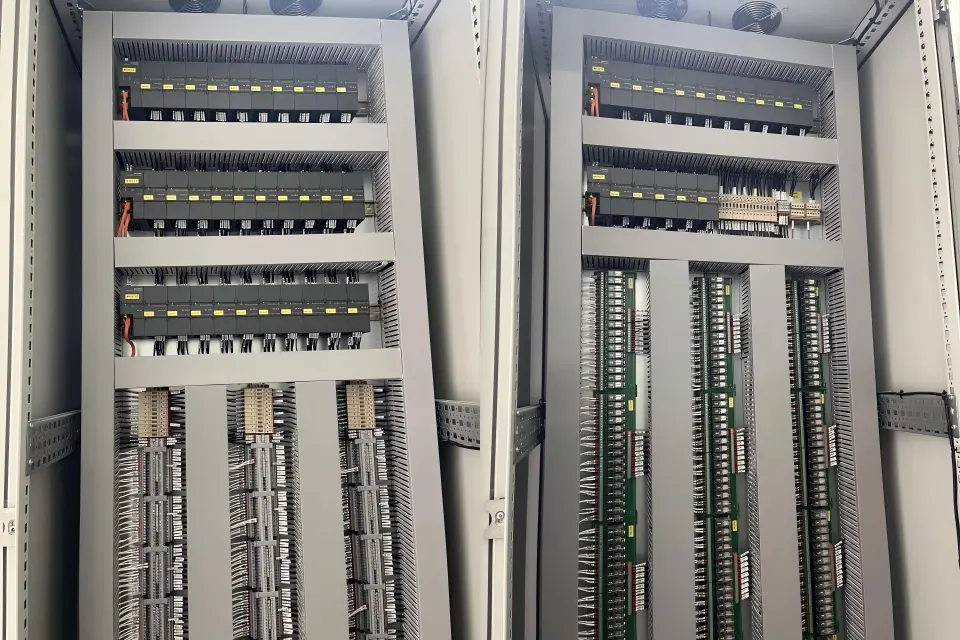
Strong Expansion Capabilities: In wastewater treatment projects, the number of field I/O points is often high. If traditional modules with a small number of I/O points are used for expansion, not only would more modules be required, but installation space, wiring effort, and hardware procurement costs would also increase.A major advantage of the PHLEEN IM155 in terms of I/O expansion is its support for PHLEEN’s high-capacity modules—such as the AE16, AM12, DE32, and AN16—which balance expansion capabilities with cost-effective system configuration.
Dual PROFINET Ports + RS485: End-to-End Daisy-Chain Networking and Versatile Cabinet Integration:
Dual Network Ports: Integrated with dual PROFINET ports, it supports direct daisy-chain connections in linear or tree-type topologies, eliminating the need for additional switches within the cabinet and enabling end-to-end daisy-chain networking. When paired with PHLEEN’s fiber-optic switches, fiber-optic links can reach even the most remote village stations, making maintenance, rewiring, and adding new stations extremely convenient.
RS485: The IM155 comes equipped with an RS485 interface, enabling Modbus-RTU-to-PROFINET communication. This allows data from secondary instruments—such as pH, DO, level, and flow meters—to be collected at a single remote station, eliminating the need for additional serial gateways. This not only reduces control cabinet costs but also saves space inside the cabinet.
Improved Engineering Efficiency and Simplified Maintenance: The product provides a standard GSD device description file. Engineers can import the IM155 into any PROFINET configuration environment that supports the corresponding GSD file (e.g., TIA Portal) to complete device identification, network configuration, and I/O module configuration.Communication between different cabinets can be achieved with a single network cable, reducing the complexity of configuring remote I/O device connections and improving engineering and commissioning efficiency.
Results & Impact: Driving Cost Efficiency and Smart O&M
By introducing the IM155 remote I/O module and the accompanying high-density expansion solution, this series of rural wastewater treatment projects has achieved significant results:
Engineering costs were significantly reduced: High-density expansion modules (e.g., AE16, AN16, DE32) and the dual-port daisy-chain configuration reduced control cabinet size and on-site cabling by approximately 30%.
Commissioning time was cut by more than half: Standard GSD files and simplified PROFINET configuration reduced on-site commissioning and turnkey project cycles by over 50%, effectively doubling engineering efficiency.
Simpler Operation and Maintenance: The highly reliable, industrial-grade design withstands the harsh outdoor conditions of rural control cabinets—characterized by extreme temperature fluctuations and high humidity—enabling long-term, stable operation with minimal or no on-site supervision.
From rural wastewater treatment to municipal environmental projects, the IM155 demonstrates how distributed I/O and remote data acquisition can turn dispersed, hard-to-maintain sites into a centrally managed, efficient operation.